

How AI-Generated Images Are Changing Visual Authenticity Standards
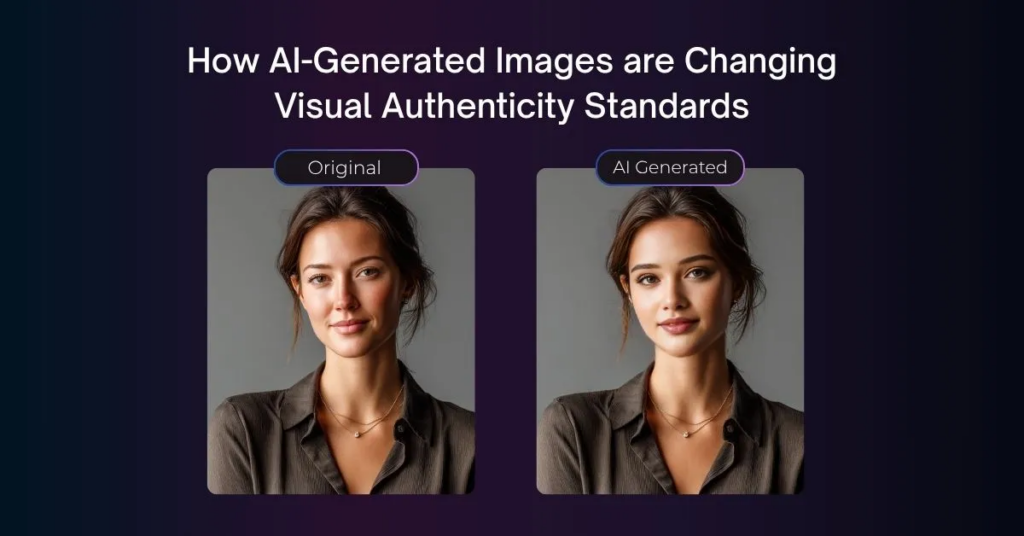
Would you trust an image if you discovered it was never photographed? As AI generated images become increasingly realistic, the line between captured and created visuals is rapidly blurring. This shift is transforming how audiences perceive visual authenticity, challenging traditional ideas of trust, creativity, and credibility. For brands and marketers, the focus is no longer just on how an image is made, but on how transparently and effectively it communicates a message.
This article explores how AI generated images are reshaping visual authenticity standards, influencing marketing impact, and redefining what authentic visual communication means in the modern digital era.
Key Takeaways
- AI-generated images are redefining visual authenticity by shifting the focus from how an image was created to how it is perceived, interpreted, and trusted.
- Brands can create content faster and at scale using AI visuals, enabling rapid campaign production, personalization, and experimentation.
- Trust and transparency are becoming critical differentiators, as audiences increasingly expect brands to disclose and responsibly use AI-generated content.
- The most effective creative workflows are hybrid, combining photography, design, and AI-generated images to balance efficiency with authenticity.
- The future of visual content creation depends on ethical AI use, where innovation is paired with clear guidelines, brand consistency, and responsible storytelling.
Table of Contents
- The Shift from Captured Reality to Generated Reality
- Visual Authenticity in the Age of AI Generated Images
- Marketing Impact: How Brands Are Rewriting Visual Strategy
- Brand Trust: The New Currency of Visual Communication
- How AI Content Creation Is Redefining Design Workflows
- Maintaining Authentic Marketing in an AI-Driven World
- The New Definition of Authenticity
- The Role of AI Tools in Modern Visual Content Creation
- Challenges Ahead for Visual Authenticity Standards
- Conclusion
- FAQ
The Shift from Captured Reality to Generated Reality
For decades, photography was considered a direct reflection of reality. The camera was trusted as a neutral observer. However, AI tools have broken this assumption by introducing a new category: synthetic realism.
Today, AI generated images can replicate lighting, texture, emotion, and composition so accurately that distinguishing them from real photographs is increasingly difficult.
This has created a new challenge for brands and creators:
- If everything can be generated, what defines “real”?
- If realism is programmable, what becomes authentic?
This shift is forcing marketers and designers to rethink visual authenticity as a perception-based standard rather than a purely factual one.
Visual Authenticity in the Age of AI Generated Images
Visual authenticity now depends on context, intent, and transparency rather than origin alone.
Audiences are no longer asking only “Is this real?” but also:
- Does this align with the brand’s message?
- Is this visually misleading or clearly expressive?
- Was AI used responsibly in this creative process?
This evolving mindset is changing how brands approach AI visuals in campaigns, product marketing, and storytelling.
Instead of rejecting AI entirely, many brands are adopting a hybrid approach. They are combining photography, design trends, and AI-generated images to create more flexible and scalable visual systems.
Marketing Impact: How Brands Are Rewriting Visual Strategy
The rise of AI generated images is significantly influencing marketing impact across industries. Brands now have access to unlimited visual production at lower cost and faster speed, but this comes with new responsibilities.
Faster Creative Production
Marketing teams can generate visuals in minutes rather than days. This allows rapid testing of concepts and A/B variations.
Hyper-Personalized Visual Content
AI enables brands to create visuals tailored to audience segments, demographics, and cultural contexts without traditional production constraints.
Increased Content Saturation
While production is easier, competition for attention is higher than ever. This makes authenticity a key differentiator.
Risk of Trust Dilution
Overuse of synthetic visuals without disclosure can weaken brand trust, especially when audiences feel misled.
In this environment, marketing success depends not just on creativity, but on credibility management.
Elevate Your Visual Content Strategy
Streamline your creative workflow, boost design efficiency, and produce impactful content tailored for today’s fast-paced digital platforms.
Brand Trust: The New Currency of Visual Communication
The rapid adoption of generative AI is already transforming how brands create and distribute visual content. According to Gartner, 77% of organizations using generative AI in marketing have adopted it for creative development tasks. At the same time, audiences are becoming more cautious about AI-generated content, making transparency and responsible visual communication increasingly important.
Trust has become one of the most valuable assets in digital communication. As AI generated images become more realistic, audiences are increasingly sensitive to manipulation. This shifts visual authenticity from how an image is made to how honestly it is presented.
Brands that are transparent about their use of AI content creation are more likely to maintain credibility and strengthen audience relationships. Whether AI is used for ideation, enhancement, or full generation, disclosure helps preserve trust in an AI-driven visual landscape.
How AI Content Creation Is Redefining Design Workflows
Designers are no longer just creators; they are becoming directors of visual systems.
AI content creation is changing workflows in three key ways:
Concept Development Instead of Manual Execution
Designers now focus more on ideation, prompting, and refining visual direction rather than starting from scratch.
Iteration at Scale
Multiple variations of the same visual concept can be produced instantly, allowing deeper experimentation.
Blended Production Pipelines
Traditional photography, 3D rendering, and AI generated images are being combined into unified workflows.
This hybrid approach is becoming standard in modern creative studios and marketing teams.
Maintaining Authentic Marketing in an AI-Driven World
As AI generated images become mainstream, maintaining authentic marketing requires intentional strategy rather than default practices.
Be Transparent About AI Usage
Clear communication about when and how AI is used strengthens credibility and avoids audience confusion.
Anchor Visuals in Real Brand Values
Even when images are generated, the message should reflect real brand identity and intent across campaigns and social media.
Avoid Over-Polishing Reality
Excessively perfect visuals can feel artificial. Incorporating human imperfection often improves relatability.
Use AI as an Enhancement Tool, Not a Replacement
The strongest results often come from blending real photography with AI generated images rather than replacing it entirely.
Build a Visual Ethics Framework
Define internal guidelines for how AI visuals should be created, reviewed, and published.
The New Definition of Authenticity
The meaning of authenticity is shifting from origin-based truth to experience-based trust.
A visual no longer needs to be physically real to feel authentic it needs to be:
- Consistent with brand identity
- Transparent in its creation process
- Emotionally aligned with audience expectations
- Ethically produced and shared
This is where visual authenticity becomes less about documentation and more about responsible storytelling.
The Role of AI Tools in Modern Visual Content Creation
Modern creative platforms are adapting to the rise of AI-generated imagery by combining traditional design tools with AI-powered capabilities. These solutions help marketers, designers, and content creators accelerate ideation, automate repetitive tasks, and produce visual assets at scale.
As organizations adopt hybrid design workflows, AI tools are increasingly being used alongside photography, illustration, and graphic design rather than replacing them entirely. This approach helps teams work better while keeping their creative ideas and brand image the same.
Platforms such as FreePixel reflect this evolution by offering resources and an AI-powered image generator that enables faster content creation while helping users maintain quality and consistency across visual projects.
The growing integration of AI into visual content creation reflects a broader shift toward flexible, scalable production processes that support both innovation and authenticity.
Challenges Ahead for Visual Authenticity Standards
Despite its advantages, AI-generated imagery introduces several ongoing challenges:
- Difficulty distinguishing real and synthetic visuals
- Risk of misinformation through hyper-realistic images
- Over-reliance on AI aesthetics leading to visual uniformity
- Ethical concerns around representation and consent
These challenges highlight why brand trust and visual authenticity must evolve alongside technology rather than lag behind it.
Conclusion
AI generated images are changing how visuals are made and redefining what visuals mean. In today’s digital world, authenticity isn’t just about capturing reality; it’s about communicating truth, intent, and transparency.
Marketers and designers must use AI responsibly to preserve visual authenticity and strengthen brand trust. As image creation becomes easier and more scalable, the true differentiator will be human judgment, not technology. Selecting, contextualizing, and communicating meaningful visuals is essential for building credible and authentic brand experiences.
The future of AI content creation is clear: balance. Combine innovation with integrity to build visuals that are both powerful and believable.
Generate Professional AI Images for Your Next Campaign
Leverage AI-driven creativity and professional-quality visuals to elevate your marketing and design workflow.
FAQ
1. What are AI-generated images and how are they created?
AI-generated images are visuals created using machine learning models that interpret text prompts or input data to produce original images. These systems analyze large datasets of visuals to generate realistic or stylized outputs, often without the need for traditional photography or design tools.
2. How are AI-generated images changing visual authenticity?
AI-generated images are reshaping visual authenticity by shifting focus from how an image is created to how it is perceived and trusted. As synthetic visuals become more realistic, audiences now evaluate authenticity based on transparency, context, and intent rather than origin alone.
3. What is the impact of AI-generated images on marketing?
AI-generated images are transforming marketing by enabling faster content creation, cost efficiency, and personalized visual campaigns. However, they also increase competition for attention and require brands to prioritize trust and transparency to maintain credibility.
4. How can brands maintain trust when using AI-generated visuals?
Brands can maintain trust by being transparent about AI usage, aligning visuals with real brand values, and avoiding misleading or overly manipulated content. Clearly disclosing when AI content creation is used helps strengthen audience confidence and long-term credibility.
5. Are AI-generated images replacing traditional photography and design?
AI-generated images are not fully replacing traditional photography or design but are being integrated into hybrid workflows. Many brands now combine AI visuals with photography and design to enhance creativity, speed up production, and maintain authenticity.