

ChatGPT Images 2.0: A Breakthrough in Non-Latin Text Rendering
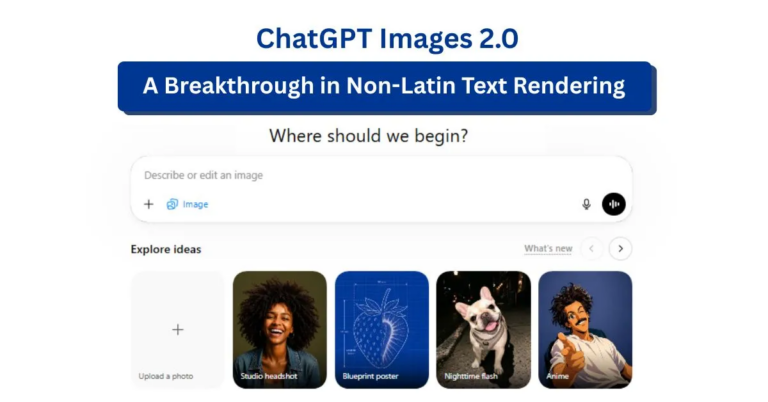
Artificial intelligence is not just for text anymore. It is changing the way we create images. With the launch of ChatGPT Images 2.0, AI image generation has become smarter, more accurate, and more inclusive for users around the world.
This new upgrade in multilingual image generation featur, which is used by creators from the Hindi-speaking community as well as Japanese designers, makes it easy to achieve powerful capabilities that were previously difficult to achieve. In this guide, we’ll explore everything you need to know about the ChatGPT 2.0 model, including its multilingual strengths, advanced features, and how it compares to other image generator platforms.
Key Takeaway:
- ChatGPT Images 2.0 is an advanced AI image generator with improved prompt understanding, realism, and multilingual support.
- It can generate accurate visuals in multiple languages like Hindi, Japanese, Chinese, and Korean with better text rendering.
- The model improves design quality by producing consistent, structured, and culturally relevant images from simple prompts.
- It supports use cases like marketing visuals, education content, storytelling, and professional design workflows.
- Overall, it reduces manual editing time and makes global, AI-powered visual creation faster and more accessible.
What’s Inside This Guide
What is ChatGPT Images 2.0?
ChatGPT Images 2.0 is an advanced image generator that understands what you’re saying and knows what it’s showing. It builds on earlier versions of the chatgpt image generator, adding more contextual awareness and significantly improving how text is rendered.
This system is different from traditional tools because it can understand what you mean, not just what you type.
Key capabilities include:
- Multilingual understanding
- Cultural accuracy
- High-resolution visual generation
- Better prompt interpretation
It also works as a smart photo prompt engine, meaning the better your input, the better your output.
Why Multilingual Image Generation Matters in 2026
Earlier AI tools were mostly optimized for English, limiting global accessibility. However, in 2026, digital content is truly multilingual, with audiences engaging across platforms like Instagram, YouTube, and e-commerce sites in their native languages.
ChatGPT Images 2.0 solves this gap by enabling:
- Native-language visual creation
- Faster localization of campaigns
- Culturally accurate storytelling
For example, brands targeting Indian audiences can now generate Hindi text-based visuals directly without manual editing., where the ability to use AI in many different languages is becoming a big trend in 2026.
What’s New in ChatGPT Images 2.0

The latest version of ChatGPT is a new type of AI that can create images. It supports more languages, understands prompts better, and can produce more accurate text within images. It also provides more realistic, organized and culturally appropriate images for users worldwide.
1. Advanced “Thinking” Capabilities
One of the biggest innovations is the introduction of reasoning-based image generation.
The model can:
- Analyze prompts more deeply
- Plan image structure before generating
- Even use external data for better accuracy
This “thinking” approach allows the AI to create more structured and realistic visuals, including layouts, infographics, and multi-panel designs.
2. Multilingual Image Generation (Hindi, Japanese & More)
ChatGPT Images 2.0 significantly improves multilingual support, enabling text generation in languages like:
- Hindi
- Japanese
- Chinese
- Korean
- Bengali
This is a major breakthrough because earlier models struggled with non-English scripts.
Now, AI can:
- Generate readable text inside images
- Maintain cultural context
- Design region-specific visuals
This makes it ideal for global marketing and localized content creation.
3. Advanced Japanese Typography Support
Japanese is one of the most complex writing systems. It combines three types of writing: Kanji, Hiragana and Katakana. ChatGPT Images 2.0 makes it much easier to use these scripts.
The changes include:
- Accurate character generation
- Support for vertical and horizontal layouts
- Better visual balance in designs
This means that the images created by the ChatGPT image generator can be used more easily without having to make a lot of changes.
This is a big time-saver for designers working in global markets.
4. Smarter Prompt Understanding
How well AI visuals work depends a lot on how well the user understands the prompts.
With ChatGPT Images 2.0:
- Chatgpt prompts are interpreted with context
- Cultural meaning is considered
- Visual elements align better with user intent
For example:
- A “traditional Indian wedding” prompt generates realistic attire, colors, and settings
- A “Japanese street festival” prompt reflects authentic cultural elements
This level of understanding reduces trial and error.
5. Improved Text Rendering (Biggest Upgrade)
One of the most important improvements is accurate text generation inside images.
Previously, AI tools often produced:
- Broken words
- Gibberish text
- Misaligned fonts
With ChatGPT Images 2.0:
- Small text is clearer
- UI elements are more precise
- Posters and ads look realistic
In fact, the model can now generate usable designs without manual correction.
6. Multi-Image Generation from a Single Prompt
ChatGPT Images 2.0 introduces the ability to generate multiple images from a single prompt while maintaining visual consistency. This means users can create a set of related images in one go, instead of generating each image separately.
This feature is especially useful for creating structured visual content such as:
- Storyboards for videos or animations
- Comic panels with consistent characters and scenes
- Marketing campaigns with unified brand style and messaging
The model ensures that key elements such as characters, colors, and overall style remain consistent across all generated variations, making the output more cohesive and professional.
7. Hyper-Realistic Image Generation
The model can create visuals that are extremely close to real-life photos.
It can generate:
- Fake screenshots
- Magazine-style images
- Product visuals
- Realistic portraits
This realism is powerful, but it also makes us ask questions about how real it is and whether it is right to use it.
8. Flexible Aspect Ratios and Output Formats
ChatGPT Images 2.0 offers greater flexibility with advanced support for multiple aspect ratios and output formats. This makes it easier to create visuals that fit real-world use cases without extra editing.
With support for wide ratios like 3:1 and tall formats up to 1:3, the model can generate content suitable for banners, presentation slides, posters, mobile screens, bookmarks, and social media graphics.
This improved flexibility reduces the need for post-processing and allows users to produce ready-to-use assets across different platforms and creative needs instantly.
Japanese Typography and Non-Latin Script Support

A major breakthrough in ChatGPT 2.0 is its improved handling of complex scripts like Japanese, which includes Kanji, Hiragana, and Katakana.
Improvements include:
- Accurate character rendering
- Proper vertical and horizontal layout support
- Balanced visual composition
This makes the tool highly useful for global designers working with Asian markets.
How ChatGPT Images 2.0 Helps Creators
This update is not just for tech users; it benefits everyday creators too.
Designers can:
- Quickly generate visual concepts
- Experiment with different styles
- Save time on early drafts
Marketers can:
- Create localized campaigns faster
- Generate region-specific visuals
- Improve engagement with audiences
Educators can:
- Build visual learning materials
- Generate diagrams in native languages
- Improve student engagement
Challenges Still Remaining
Despite major improvements, ChatGPT Images 2.0 still has some limitations:
- Complex scripts may require minor corrections
- Limited control over advanced typography
- Cultural accuracy depends on prompt quality
However, these challenges are gradually being solved as the ChatGPT 2.0 model evolves.
Future of Multilingual AI Image Generation
The future of image generation tools is heading toward complete automation and personalization.
With continued innovation from, we can expect:
- Near-perfect multilingual text rendering
- Fully integrated chatgpt photo editor features
- Smarter photo prompt suggestions
- Real-time visual customization
Soon, AI will be handling the whole creative process, from coming up with an idea to putting the final touches on a project. This will make design faster and easier for everyone.
Wrapping Up:
ChatGPT Images 2.0 is a major breakthrough in chatgpt image generation. By improving multilingual support, prompt understanding, and text accuracy, it makes AI tools more powerful and practical for global users.
Whether you’re using an image generator for marketing, design, or content creation, this update allows you to create better visuals with less effort.
As AI continues to evolve, tools like ChatGPT Images 2.0 will play a central role in shaping the future of digital creativity.
FAQs
1. What is ChatGPT Images 2.0?
ChatGPT 2.0 is an advanced AI image generation system that creates visuals from text prompts with improved multilingual support, better text accuracy, and more realistic outputs.
2. How does the latest ChatGP improve multilingual image generation?
It supports multiple languages like Hindi, Japanese, Chinese, and Korean, allowing users to generate culturally accurate visuals with readable native-language text directly inside images.
3. Can ChatGPT 2.0 generate images with accurate text?
Yes, one of its biggest improvements is enhanced text rendering, which produces clearer, more accurate text in images, reducing errors like broken or unreadable words.
4. What makes ChatGPT Images 2.0 different from earlier AI image tools?
It offers better prompt understanding, reasoning-based image creation, multilingual support, consistent multi-image generation, and more realistic visual outputs.
5. Who can benefit from Chatgpt Images 2.0?
Designers, marketers, educators, and content creators can all use it to quickly generate high-quality, localized, and visually consistent content for global audiences.