How AI Image Generators Are Changing the Game for Bloggers & Businesses
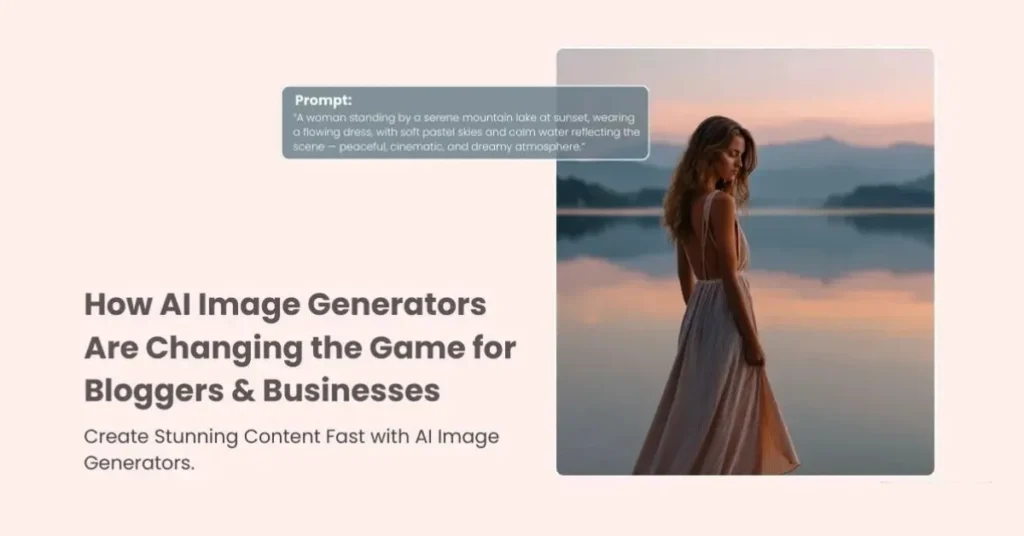
In today’s fast-paced digital world, the most important thing is visual content. If you’re a blogger, you need high-quality images to make your posts interesting. If you’re a shop, you need high-quality images to show off your products. And if you’re a marketing agency, you need high-quality images to create campaigns. In the past, to create visuals you needed to be either a good photographer, a graphic designer, or someone with lots of money to buy stock images. This often meant a lot of time, money and effort.
Now, there are tools that use artificial intelligence (AI) to create images from text, sketches or templates. These tools are quickly changing the way content creators, bloggers and businesses make visual content. They are making professional-quality images available to everyone, no matter what their design experience is.
This blog looks at how AI image generators are changing content creation, what are the good points and the bad points of this, and what opportunities they bring.
Table of Contents
- What Are AI Image Generators?
- How Bloggers Are Leveraging AI Image Generators
- How Businesses Are Adopting AI Image Generators
- Key Benefits of AI Image Generators
- Challenges and Ethical Considerations
- Case Studies: Bloggers and Businesses Using AI Image Generators
- Tips for Bloggers & Businesses Using AI Image Generators
- Future Trends in AI Image Generation
- Conclusion
What Are AI Image Generators?
AI image generators are software applications that use special computer programs called algorithms, particularly machine learning and deep learning, to generate images. They look at lots of pictures and learn patterns, colours, shapes and textures to create new images. Some popular tools include DALL·E, MidJourney, Stable Diffusion, and Canva’s AI Image Generator.
Unlike traditional graphic design software, which requires manual creation of elements, AI image generators allow users to produce images almost instantly. Just type in a description, like “modern office workspace with natural light”, and the AI will create a realistic image based on what you’ve written.
How Bloggers Are Leveraging AI Image Generators
1. Enhancing Blog Post Visuals
It is very important for people to be able to see your blog if you want them to engage with it. Studies show that articles with images get 94% more views than those without. Bloggers now use AI image generators to:
- Draw pictures to help people understand ideas that can’t be seen.
- Make a header image that is different from all the others.
- Design infographics
- Make images that are like stock images, but for specific topics.
For example, a travel blogger writing about “eco-friendly resorts in Bali” can find images that match the article’s tone and style, avoiding generic stock images.
2. Maintaining Consistent Branding
It’s important to keep up a consistent brand image. Bloggers often find it hard to make all their posts look the same. AI image generators can produce images that have the same colours, style and format, which makes the blog’s visual style consistent.
3. Saving Time and Reducing Costs
It can take hours or even days to create or find good images. AI image generators can help you by reducing the workload, so you can produce images in minutes. This saves time and money that would otherwise be spent on photographers or stock photo subscriptions.
How Businesses Are Adopting AI Image Generators
1. E-Commerce Product Visuals
Online retailers use product images to help people decide what to buy. AI image generators help businesses by:
- Make the backgrounds of product photos transparent.
- Take photos of products in different places to show how they can be used in everyday life.
- Make marketing images for the current season.
This makes it easier for e-commerce brands to create consistent, professional images without having to pay for expensive photoshoots.
2. Marketing Campaigns and Social Media
For social media and digital marketing campaigns, images must be eye-catching and unique. AI image generators help marketers by:
- Test lots of different ideas about what things look like quickly.
- Make graphics for your campaign.
- Make great images for adverts, banners and social media posts.
This flexibility makes things more efficient and improves how well campaigns work by providing interesting content that can be used in large quantities.
3. Personalized Visuals for Target Audiences
Some AI tools can create personalized images based on things like the user’s demographics, interests, or past behaviour. This creates new opportunities for brands to deliver content that is exactly what their customers want, which increases how much customers engage with the brand and how many of them buy things.
Want to try creating personalized visuals instantly? Explore FreePixel and bring your ideas to life.
AI Image Generator
Key Benefits of AI Image Generators
- Speed and Efficiency – Make images in seconds instead of hours.
- Cost-Effectiveness – Try to spend less money on photos, designers and photography.
- Creative Flexibility – Try out different styles, themes and visual effects, even if you don’t have any technical skills.
- Accessibility for Non-Designers – Anyone can create professional-looking visuals using simple text instructions.
- Scalability – You can make hundreds of images at once for marketing campaigns or product catalogues.
- Enhanced Engagement – Unique, high-quality visuals get more attention and encourage audience members to interact.
Challenges and Ethical Considerations
While AI image generators offer many benefits, there are important challenges:
1. Accuracy and Realism
Not all images made by AI are perfect. Complicated designs, lifelike human faces, or small details may need to be changed by hand.
2. Copyright and Intellectual Property
AI models are trained on large sets of data, including existing artworks and photographs. People are still discussing who owns the copyright of AI-generated images and whether it is legal to use them for commercial purposes. Users should check the licensing terms of the AI tool they use.
3. Authenticity and Trust
If images used by bloggers and brands are misleading, people may stop trusting them. Images that are too stylised or unrealistic may confuse audiences or misrepresent products and services.
4. Data Privacy
Some AI tools require you to upload sensitive content to cloud servers. Businesses have to make sure they keep data private and follow the rules.
5. Environmental Impact
AI image generation uses a lot of computing power, which uses energy. Using technology responsibly, like batch processing and choosing energy-efficient platforms, can reduce the environmental impact.
Case Studies: Bloggers and Businesses Using AI Image Generators
Travel Bloggers
Travel bloggers are using AI image generators to create custom visuals of places when they can’t find the right stock images. This helps them to have a unique look for their blog and get readers interested with images that you can really get lost in.
Fashion Brands
Fashion companies are using AI to create images for their products, as well as to plan how they will promote their brand during the next season. This means that they don’t need to take as many photos, and can get the campaign ready more quickly.
Tech Startups
Tech startups often need graphics for their websites, apps and marketing campaigns. AI image generators let small teams make visuals themselves, so they don’t need a design team.
Tips for Bloggers & Businesses Using AI Image Generators
- Start with Clear Prompts – If you give more specific instructions, the results will be more accurate. Describe the style, mood, colours and subject of the piece.
- Use Batch Generation – Make as many different versions of the same idea as you can and choose the best one.
- Combine AI with Editing Tools – You can use Photoshop, Canva or other editing software to make small changes to AI images.
- Respect Copyright and Licensing – Make sure that the images can be used commercially.
- Maintain Brand Consistency – Set style and colour rules for AI-generated images to match your brand.
Future Trends in AI Image Generation
- Integration with AR/VR – AI-generated visuals will create amazing experiences for websites, apps and marketing campaigns.
- Personalized Content – AI will generate images based on what users do and what they like, so that it can market to them.
- Real-Time Image Generation – AI could create custom visuals in real time for live content or interactive media.
- 3D and Animated Visuals – AI will create 3D images and animations to make storytelling more interesting.
- Collaborative AI Tools – AI will help designers instead of replacing them, allowing humans to focus on strategy, storytelling, and creative direction.
Conclusion
AI image generators are changing the way bloggers and businesses make content. They are fast, cheap, and let you be as creative as you like, so anyone can make high-quality images. From bloggers making interesting posts to brands doing big marketing campaigns, AI tools make work easier and better.
But there are also some drawbacks. It is important to make sure that everything is real, that copyright is respected, that people’s personal information is kept private, and that the environment is not damaged.
The future of AI image generation will lead to even more innovation, from personalized visuals to 3D and augmented reality content. If creators and businesses use these tools responsibly, they can stay ahead of the competition and produce professional, engaging, and visually stunning content.
Want to improve your images? Try out tools like FreePixel AI Image Generator to create professional images in seconds.